
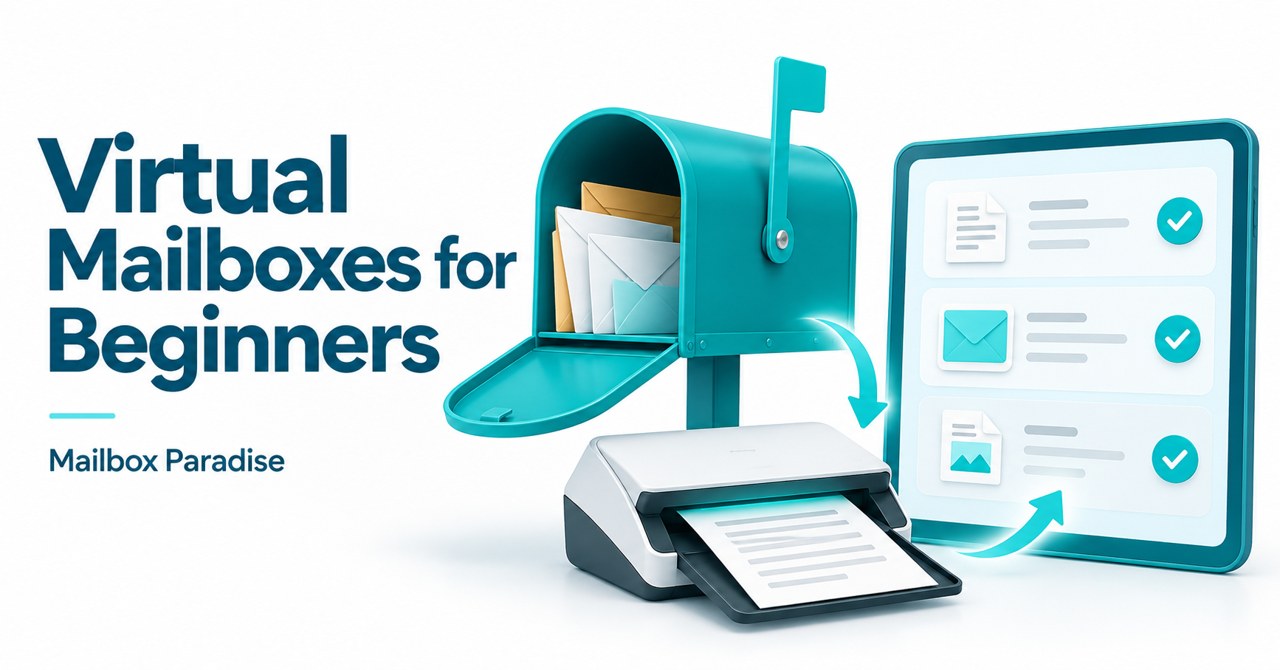
A virtual mailbox gives you a way to manage physical mail through a remote service. The useful question is how the service handles your actual letters, documents and packages. An attractive address means little if the operating rules do not fit the work you need done.
Start with a list of senders, expected mail volume, time-sensitive documents and the originals you need to retain. Then compare location rules, handling fees, forwarding options and account access. Those details determine the routine after the subscription begins.
This guide explains how to evaluate a virtual mailbox without assuming every provider offers the same service. Examples are hypothetical. Requirements vary by operator, destination and intended use. This is general education, not legal advice or a guarantee an address will be accepted by a bank, government agency or other organization.
Read about Mailbox Paradise and our editorial standards for the publication’s approach to research and recommendations.
Understand the physical service behind the inbox
A remote inbox is the interface. Physical mail still arrives at a location, where an operator receives and handles the items under the service agreement. Depending on the plan and request, the operator might photograph envelopes, scan contents, store originals, shred items or forward mail.
Do not assume every action is included in the subscription. An envelope image and a content scan are different tasks. Forwarding involves shipping and handling. Storage might have separate limits for letters and packages. Each provider and location sets its own conditions.
Identify who operates the location and who provides the software. A network marketplace might connect you with different local operators, while another service manages its own processing facilities. The distinction affects which questions belong with the platform and which belong with the location.
Write down the actual service you need. “Receive letters and forward a monthly bundle” describes a different routine from “scan time-sensitive business notices and handle occasional parcels.” A clear job description makes the comparison easier.
List your senders before choosing an address
Create an inventory of organizations sending important mail. Include customers, suppliers, financial institutions, insurers and relevant public agencies where applicable. Note which senders require original documents, identity checks or a particular type of address.
Separate a mailing address from other address requirements. A place receiving mail does not automatically satisfy a residential address request, registered-agent obligation or physical business-location requirement. Verify the intended use directly with the organization asking for the address and with a qualified adviser when needed.
Do not change every sender at once before the service is ready. Confirm onboarding, the exact address format and the names authorized to receive mail. A staged transition makes a missed item easier to investigate.
Keep a record of which senders have been updated and when. This list becomes useful again if you later change providers. Depending entirely on a forwarding order leaves you with less control over the information held by the actual senders.
Compare locations as well as brands
Look at the specific location’s operating hours, pickup arrangements, supported carriers and available handling services. An advertised network feature does not necessarily apply to every address. Ask for the location-specific fee schedule and service terms.
Check how incoming items are processed. Ask about ordinary processing times, weekend handling and the escalation route for an item requiring attention. A general marketing statement about convenience is less useful than a clear explanation of the location’s actual routine.
For packages, ask about size restrictions, storage charges, pickup requirements and onward shipping options. Do not assume a letter-focused service is suitable for frequent retail returns or bulky shipments. Explain the actual use case before relying on an address.
Consider continuity if the location closes or changes operator. Ask how customers would be notified and what happens to remaining mail. The answer belongs in the evaluation before a large number of senders begin using the address.
Read the onboarding requirements carefully
United States commercial mail receiving arrangements involve an authorization process. The USPS recipient services rules describe requirements for commercial mail receiving agencies. Providers should explain their current onboarding steps and the information required for the intended addressee.
Use the current USPS Form 1583 and the provider’s legitimate instructions when the form applies. Confirm identity-document and signing requirements through the proper process. Do not send identity documents to an unverified contact or an unrelated upload link.
Check how individual and business names are added. A subscription for one name does not automatically authorize every family member, employee or business entity. Ask about additional recipients, documentation and charges before directing their mail to the location.
Keep a secure copy of the completed authorization and service agreement where appropriate. Record the onboarding status without placing sensitive documents in ordinary shared notes. Mail handling involves private information, so convenience should not replace careful access decisions.
Understand the subscription and action fees
Read the subscription allowance alongside the action fees. Relevant categories often include incoming items, content scans, additional pages, storage, forwarding handling, postage, package processing and extra recipients. The actual categories and pricing depend on the service.
Build a simple usage estimate rather than comparing the lowest advertised monthly price. Count the actions you expect to request. A plan with a low base fee might be a poor fit when most of your mail needs scanning or forwarding.
Use a hypothetical example to test the method. Suppose a service charges a base subscription plus separate fees for additional scans and shipment handling. Calculate the month using your expected actions, then add actual postage based on the provider’s quotation. Do not assume the advertised base fee represents the total bill.
Review renewal, cancellation and unused allowance rules. Check whether an annual commitment, location change or account closure creates additional obligations. Keep the current fee schedule in your evaluation notes so the decision has a clear reference date.
Plan what happens to original documents
Create handling rules for different kinds of mail. Some items are useful as a scan, while others need an original retained or forwarded. The correct treatment depends on the document and the organization using the record.
Do not authorize automatic shredding before understanding the consequences. A scan might not replace an original for every purpose. Ask the relevant professional or recipient about documents whose original form matters.
Set a review rhythm for stored items. Record who decides whether to scan, retain, forward or dispose of each category. A long list of unreviewed envelopes creates a backlog even when the service receives mail correctly.
For forwarding, verify the destination, contents and shipping method before submitting the request. Keep the shipment reference and relevant tracking information. A completed request in the inbox and confirmed physical delivery are separate stages in the process.
Compare forwarding with changing your address
A mailbox service’s forwarding request and a postal change-of-address order are different processes. Review the applicable rules before assuming one substitutes for the other. Commercial mail receiving arrangements also involve conditions affecting how mail is handled when the relationship ends.
The USPS standard forwarding information explains postal change-of-address options and related requirements. Use official USPS channels for that process and verify whether your situation is eligible. Do not treat a provider’s marketing summary as the complete postal rule.
Update important senders directly as part of the transition. Keep the old and new arrangements documented until you understand how outstanding items will be handled. Ask both operators about any overlap and remaining storage obligations.
If you live or travel internationally, check the provider’s destinations, carrier options, customs handling and restrictions before relying on overseas forwarding. Shipping eligibility and delivery timing vary. Obtain a current quote for the actual destination and contents instead of assuming every item travels under the same conditions.
Check privacy and account access
Mail often contains identity, financial and business information. Ask how the service controls staff access, stores scans and handles deletion requests. Review the provider’s current privacy and security documentation for the relevant product and location.
For a business account, identify the person allowed to request scans, forwarding and disposal. Give team members only the access required for their responsibilities. An assistant checking envelope notifications does not necessarily need permission to delete records or redirect sensitive originals.
The FTC guide to protecting personal information provides a broader business reference for handling sensitive information. Apply a proportionate process to downloaded scans and identity documents in your own systems as well as evaluating the provider.
Keep account credentials in an approved credential system. Review access when a staff member leaves or responsibilities change. A virtual mailbox becomes part of the business’s information flow, so ownership and recovery need more attention than an ordinary newsletter subscription.
Test the routine with a small amount of mail
After onboarding is complete, begin with a limited, appropriate test before updating every critical sender. Confirm the exact formatting and authorized recipient name. Ask the provider how to conduct the test without violating its operating rules.
Observe the notification, envelope image, available actions and actual processing steps. Request a content scan or forwarding action only when suitable for the test item. Record the time and outcome without turning one experience into a claim about every future shipment.
Check the final invoice or account activity. Compare the actions requested with the fees applied. A trial exposes misunderstandings about included services before the mailbox becomes central to your operations.
If a step fails, use the normal support process and record the resolution. Decide whether the problem involved an incorrect address, incomplete authorization, a misunderstood service limit or a provider issue. Clear diagnosis is more useful than changing several parts of the process at once.
Build a weekly mail review routine
Set a regular time to review incoming items and notifications. Assign an owner and backup person if the account serves a business. Important notices should not depend on someone casually opening an app when they remember.
Create a short decision list: identify sender, determine urgency, request the appropriate action and record the result. Escalate unfamiliar or time-sensitive items through the relevant professional or business process. A mailbox service is not a substitute for advice about a document’s meaning.
Store important scans in the approved record location with useful filenames. Connect the document to the relevant task, customer or financial record when appropriate. Leaving every scan in the mailbox interface makes later retrieval and provider changes harder.
Review stored physical items and upcoming charges. Arrange forwarding or appropriate disposal under the policy you established. A recurring review prevents the account from becoming an expensive archive nobody understands.
Evaluate support before a problem becomes urgent
Check the available contact channels and support hours. Distinguish platform support from the person handling physical mail at the location. Ask how to escalate an item whose tracking shows delivery but whose arrival is not yet visible in the account.
Record the information support needs, such as the authorized recipient, tracking reference and delivery date. Use approved private channels for sensitive details. Do not publish identity documents or private mail images in a public complaint while seeking help.
Look for clear explanations rather than promises of perfect performance. Every physical service needs a process for mistakes and delays. A useful support policy describes how the provider investigates and communicates, not merely how quickly a generic ticket acknowledgment arrives.
Read relevant customer experiences with context. Compare the location, service and time period with your own requirements. A review of one operator or plan does not automatically describe every location under the same network brand.
Plan the exit before committing
Read the closure process, remaining-mail handling and scan-access rules before subscribing. Ask how long account access continues, which charges apply and how you retrieve originals after cancellation. Retain a copy of the relevant terms.
Export useful records through the supported controls while the account is available. Keep the sender inventory current so an address change does not require reconstructing every relationship from memory. Preserve required records according to your applicable retention process.
Do not assume the postal service will automatically redirect all mail from a commercial receiving location after closure. Confirm the applicable postal rules and provider arrangements. Direct sender updates remain an important part of a controlled transition.
When changing services, establish the new arrangement before directing important mail to the new address. Track outstanding forwarding requests and remaining items at the old location. A planned overlap is easier to manage than an abrupt cancellation followed by missing documents.
A practical comparison checklist
For each shortlisted location, record the operator, address type, intended use, recipient allowance and onboarding requirements. Add the base fee, included actions, scanning charges, storage rules and forwarding costs relevant to your workload.
Then record privacy controls, support routes, physical pickup arrangements and exit terms. Leave unanswered questions visible. A blank field awaiting confirmation is more useful than filling the comparison with assumptions from another provider’s plan.
Choose a small shortlist and ask the same questions of each service. Comparing one provider’s subscription price with another provider’s estimated all-in cost produces a misleading result. Keep the scope and expected activity consistent.
Make the final decision around the routine you will maintain. A service with an impressive list of features offers limited value if your actual needs involve reliable letter handling, occasional scans and predictable forwarding.
Questions beginners ask
Is a virtual mailbox the same as an office?
A mail receiving service and a staffed office are different arrangements. Confirm exactly what the service provides. Do not imply you work at a location or receive customers there unless the actual agreement and circumstances support the statement.
Will every organization accept the address?
Acceptance depends on the organization and intended use. Ask the party requesting the address and obtain appropriate professional advice for legal or compliance questions. A provider advertising business mail service does not guarantee universal acceptance.
Are scans included in every plan?
Read the current plan and location schedule. Envelope images, opening requests, pages and physical forwarding are distinct actions. Compare the total routine rather than assuming the word digital includes every processing step.
Should I forward every item immediately?
Choose rules based on urgency, original-document needs, storage terms and shipping costs. Some items warrant prompt forwarding, while others fit a scheduled bundle. Verify requirements for important documents with the responsible recipient or adviser.
What should I check first?
Your intended address use, recipient names, location rules and complete handling costs. Those decisions determine whether the service fits before design, app appearance or a promotional subscription price enters the comparison.
Set up a mail process you understand
List your senders and document needs, compare a few specific locations and verify the actual terms. Complete onboarding through legitimate channels, test the routine and establish a regular review before making the service central to your business.
Read our editorial standards when using future provider comparisons, and contact Mailbox Paradise with a specific research question. The useful service is the one whose physical handling, costs and responsibilities match the mail you receive.
Keep a separate exception log for items requiring a response, original retention or specialist review. Record the sender, date, responsible person and next action without copying sensitive contents into the log. Review outstanding items during each mail session. This simple record helps a backup person continue the routine when the usual owner is unavailable.

Trevor Fenner is an ecommerce entrepreneur and digital nomad. At Mailbox Paradise, he covers virtual mailboxes, business addresses and remote mail handling through provider research and practical comparisons.